
Published March 17, 2026
Best Salem Neighborhoods for Long-Term Home Value Appreciation

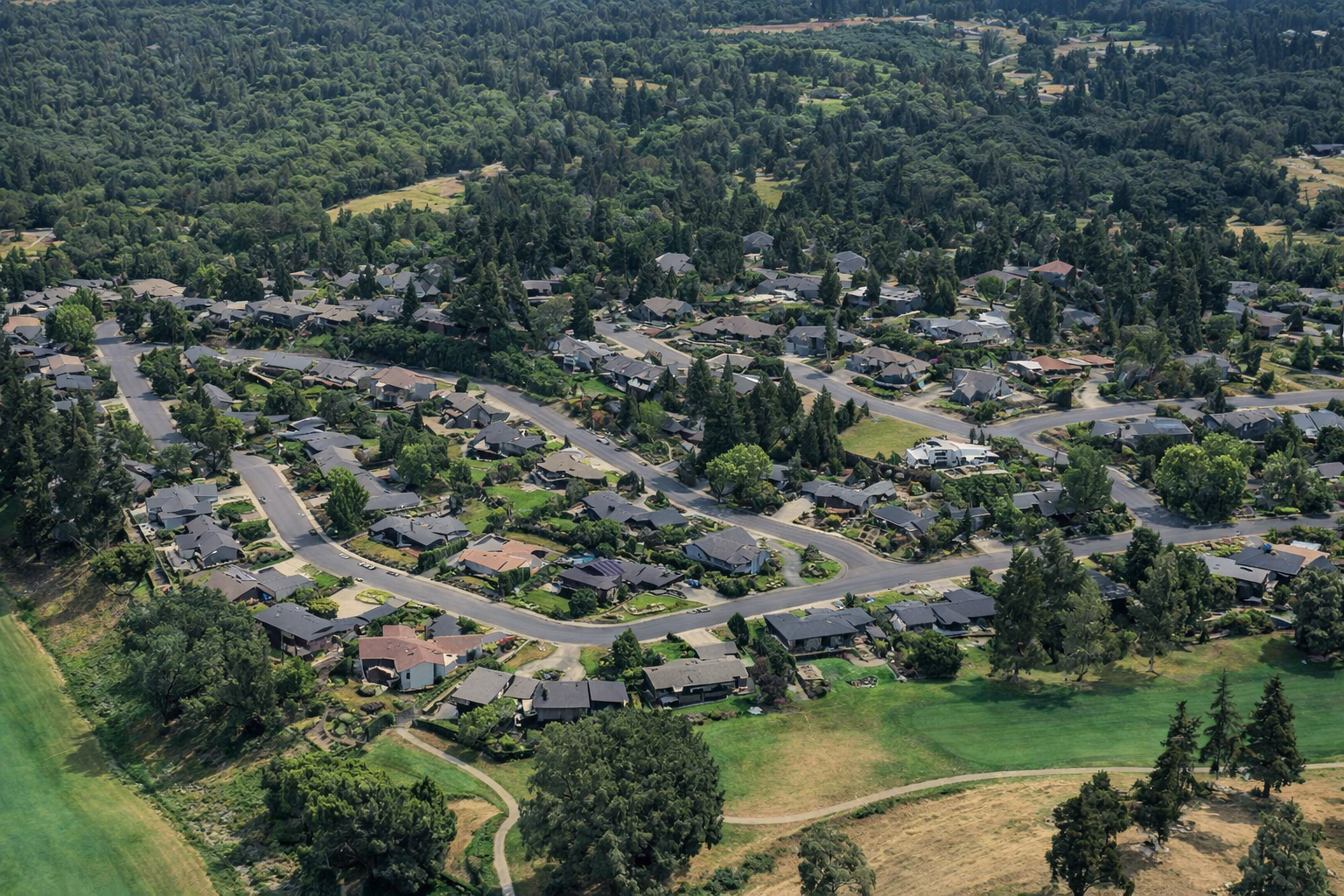
Best Salem Oregon Neighborhoods for Long-Term Home Value Appreciation
When buyers ask which Salem Oregon neighborhoods hold their value best, most online sources give them a ranking based on median list prices or a few Zillow data points. That tells you where prices are today, not how they got there or where they're going.
This post uses year-over-year sales data from the Willamette Valley Multiple Listing Service to show how specific Salem neighborhoods have appreciated over the past several years and what drives that appreciation over time. If you're buying a home in the $450,000 to $800,000 range and want your purchase to build wealth, not just provide shelter, this is where to start.
Why Neighborhood-Level Appreciation Matters More Than City Averages
Salem's overall average sale price grew from roughly $197,000 in 2012 to $512,000 in 2025, based on WVMLS data. That's a compelling number across 13 years. But city-wide averages smooth out the real story.
Within Salem, different neighborhoods have appreciated at meaningfully different rates. Some have climbed steadily with almost no volatility. Others saw sharp gains during 2021 and 2022, then gave some back. A few have been more affordable entry points with catch-up potential.
Knowing which is which matters whether you plan to stay 5 years or 25.
What drives sustained appreciation in any neighborhood
Before comparing specific areas, it helps to understand what actually moves prices over time. Location fundamentals are the starting point: access to employment, quality schools, proximity to retail and services, and commute convenience. These don't change much from year to year, but they support demand over the long term.
Low inventory in a given area amplifies appreciation. When few homes come to market and buyers compete for them, prices rise. Areas with older, more established housing stock often have this dynamic because owners hold onto homes longer and turnover is lower.
Price per square foot is another useful lens. It tells you how efficiently the market values space in a given area and helps you spot both value and potential ceiling.
South Salem: The Highest-Priced Market in the City, and Why That's Held
South Salem consistently carries the highest average sale price of any residential area in the city. Based on WVMLS data, the average sale price in South Salem ran $519,853 in 2021, $564,220 in 2022, $570,543 in 2023, $556,913 in 2024, and $574,172 through 2025. That's a fairly steady climb with a modest dip in 2024 followed by recovery.
The average cost per square foot in South Salem sits at $332, the highest in the Salem market. That's not a fluke. South Salem has the largest average home sizes in the city at around 2,200 square feet, and buyers who target this area tend to stay. Turnover is moderate, with homes averaging 79 days on market based on the past 12 months of WVMLS data.
What makes South Salem different
South Salem's appeal is tied to a combination of school quality within the Salem-Keizer district, access to South Commercial Street's retail corridor, proximity to Willamette University and Salem Health, and a higher average income demographic that keeps home maintenance levels strong throughout the neighborhood.
Homes here tend to be larger, often four-bedroom single-family houses built from the 1980s through the 2000s, with established landscaping and larger lots. That physical quality holds value in a way that newer, more compact construction often doesn't.
If you buy in South Salem in the $550,000 to $750,000 range, you're buying into the most consistently valued pocket in the city.
Want a Side-by-Side Neighborhood Comparison?
The Salem Neighborhood Comparison Guide breaks down pricing, school access, commute patterns, and lifestyle factors across South Salem, West Salem, Northeast Salem, and more. It's free and takes about two minutes to read.
Download the GuideWest Salem: Family-Driven Demand With a View Premium
West Salem sits across the Willamette River from the rest of the city, and that geography creates a distinct character. It's more suburban in feel, with newer subdivisions mixed alongside established neighborhoods, and it tends to attract buyers who prioritize space, views, and schools over walkability.
Average sale prices in West Salem moved from $474,665 in 2021 to $528,888 in 2022, then pulled back to $502,531 in 2023 before recovering to $523,849 in 2024 and settling around $516,788 in 2025. The 2022 to 2023 pullback was more pronounced here than in South Salem, a reflection of the higher price sensitivity among buyers when mortgage rates rose sharply.
Reading the West Salem numbers carefully
West Salem's average cost per square foot is $241, lower than South Salem and Southeast Salem. Part of that reflects newer, larger homes where price gets spread over more square footage. It's not a sign of lower quality, but it does suggest there's less compression in the market.
Homes here average around 2,139 square feet, and the current average days on market is 83. That's a fairly liquid market. When properly priced West Salem homes come to market, they tend to move.
West Salem is a strong choice for buyers who want more land, newer construction, and family-oriented school access through West Salem High School. The long-term appreciation track is solid, though it tends to be more rate-sensitive than South Salem because the buyer pool skews toward move-up buyers financing larger amounts.
The commute factor
The Willamette River bridges create a fixed constraint. There are only a few major crossing points, and that limits how much the west side can grow without infrastructure investment. In one sense that's a commute consideration, but it also functions as a supply constraint. Demand grows over time faster than road capacity can accommodate, which tends to support long-term price floors on the west side.
Northeast Salem: The Best Appreciation Rate Per Dollar Spent
Northeast Salem is where the appreciation-per-dollar story gets interesting. This area, which covers the suburban residential neighborhoods east of I-5 and north of Sunnyview Road, has one of the lowest average sale prices in the Salem market alongside one of the fastest days-on-market figures.
WVMLS data shows average sale prices in Northeast Salem running $427,393 in 2022, $428,367 in 2023, $453,749 in 2024, and $444,721 in 2025. The gains from 2023 to 2024 were nearly 6 percent, the strongest single-year move of any Salem residential area in that period. The 2025 pullback was modest and consistent with broader market softening.
Why Northeast Salem moves faster than other areas
Average days on market in Northeast Salem is 63, the lowest of any Salem residential area tracked by WVMLS. That means when homes are priced correctly, buyers are competing for them quickly. The price point, currently averaging around $451,000 in 2026 year-to-date, puts this area within reach of a broader pool of buyers including first-time purchasers with conventional financing and people relocating from higher-cost markets.
The area has newer school infrastructure, accessible retail along Lancaster Drive and Silverton Road, and proximity to the NORPAC corridor and other northeast employment. These aren't glamorous drivers, but they're durable ones.
The entry-point advantage
A buyer who purchased in Northeast Salem at $420,000 in early 2022 and stayed through the current market has experienced meaningful equity growth even accounting for the rate environment. The combination of lower entry price, fast-moving inventory, and consistent demand from multiple buyer types makes this area worth serious consideration for buyers who care more about appreciation trajectory than prestige address.
If you're comparing Northeast Salem to South Salem at a $150,000 lower price point, you're not necessarily trading down. You may be buying more per dollar and positioning yourself in a faster market.
Southeast Salem: Price Recovery and Consistent Demand
Southeast Salem covers a wide band of neighborhoods and housing types, which is why its numbers can look volatile on paper. Average sale prices moved from $443,955 in 2021 to $497,907 in 2022, then dipped to $482,439 in 2023, recovered to $507,208 in 2024, and continued growing to $525,866 in 2025.
What that arc shows is a market that was affected more than most by the 2022 to 2023 rate shock, but that recovered and ultimately came out ahead. The 2025 average was the highest on record for Southeast Salem, and the current 2026 year-to-date figure of $527,860 continues that trend.
Average cost per square foot here is $318, reflecting the mix of older custom homes, mid-century ranches, and some newer infill. Days on market average 136 in the past 12 months, which is on the longer side and reflects the wider price and condition variance in this area. Buyers in Southeast Salem often need more time to find the right fit because inventory is less homogenous.
If you're looking at a well-maintained home in a Southeast Salem pocket near Battle Creek or south of Kuebler, the appreciation data supports confidence in that purchase over a 7 to 10 year hold.
How to Use This Data When Buying
Appreciation data answers the backward-looking question: which neighborhoods have grown? But what you really want to know is which ones are positioned to keep growing. That's harder to predict, but a few principles hold up:
Areas with consistent buyer demand across multiple demographics tend to hold value better through rate cycles. South Salem and Northeast Salem both fit this pattern. South Salem attracts equity-rich move-up buyers and downsizers. Northeast Salem attracts first-time buyers, relocators, and value-minded families. Both pools stay active even when the market softens.
Areas with supply constraints tend to appreciate more than areas where builders can easily add inventory. West Salem has geographic constraints. South Salem has limited flat lots for new development. Northeast Salem has some room to grow but school and infrastructure constraints limit runaway oversupply.
Price per square foot tells you where the market sees value. South Salem's $332 per square foot says the market prices this area at a premium for reasons it can sustain. Buying into that premium is not the same as overpaying.
What to ask before you buy
Before committing to a neighborhood based on appreciation potential, ask yourself three things. How long do you plan to stay? Appreciation advantages are muted in short holds and compounded in long ones. What price point are you working with? Different neighborhoods offer better appreciation per dollar at different entry levels. And what does your daily life actually need? A house that fits your life is the one you'll hold through market cycles, which is how you capture the appreciation that's there.
The Wisser Homes Team tracks neighborhood-level sales data through WVMLS on an ongoing basis. If you want to dig into specific streets, price bands, or comparable sales in any of these areas before you make an offer, that's exactly the kind of analysis we do. Reach out here to start that conversation.
Practical Takeaways
- South Salem has the highest sustained average prices and cost per square foot in the city, backed by consistent demand from multiple buyer types and limited supply.
- Northeast Salem offers the fastest days on market and some of the strongest year-over-year percentage gains, at a lower entry price than South or West Salem.
- West Salem appreciation tracks closely with rate environments and move-up buyer confidence, but the geographic supply constraint supports its long-term floor.
- Southeast Salem had the sharpest correction in 2022 to 2023 but has recovered to record-level averages by 2025, rewarding buyers who held through the cycle.
- City-wide appreciation averages will always understate what's happening in specific pockets. Neighborhood-level WVMLS data gives you a cleaner picture.
Looking for data on a specific address or neighborhood before you write an offer? The best suburbs near Salem post gives a broader regional perspective, and our most affordable neighborhoods in Salem guide covers the entry-level picture in detail.
Download the Salem Neighborhood Comparison Guide
Side-by-side data on pricing, appreciation trends, school access, and lifestyle factors across Salem's key neighborhoods. Free to download.
Get the GuideFrequently Asked Questions
Which Salem Oregon neighborhood has the highest home value appreciation?
Based on WVMLS data, South Salem has the most consistently high average sale prices and the highest cost per square foot in the city at $332. Northeast Salem has shown some of the strongest single-year percentage gains, growing nearly 6 percent from 2023 to 2024.
How much have Salem Oregon home values increased over the past decade?
The Willamette Valley MLS shows Salem's average sale price grew from approximately $197,000 in 2012 to $512,000 in 2025, representing roughly 160 percent growth over 13 years. Individual neighborhoods varied significantly within that range.
Is South Salem or West Salem better for long-term appreciation?
South Salem has shown more consistent appreciation with less volatility. West Salem's appreciation is stronger in rising rate environments but pulled back more sharply when rates rose in 2022 and 2023. For buyers focused on stability, South Salem has the stronger track record. West Salem offers more for buyers who want larger lots and newer construction.
What is the average home price in Northeast Salem?
Based on recent WVMLS data, the average sale price in Northeast Salem was approximately $445,000 through 2025, with 2026 year-to-date running around $451,000. This area has the fastest days on market in Salem, averaging 63 days for the past 12 months.
How do I know which Salem neighborhood is right for my budget and goals?
Start by identifying your price range, how long you plan to stay, and what your daily life actually requires in terms of commute, schools, and amenities. From there, neighborhood-level sales data from WVMLS can show you where your budget buys the most appreciation potential per dollar. The Wisser Homes Team can pull that analysis for any specific area.
or another way