Published April 9, 2026

Salem Oregon Home Prices 2026: How 161% Growth Since 2012 Affects Sellers Today

Author Avatar

Written by Gavin Wisser

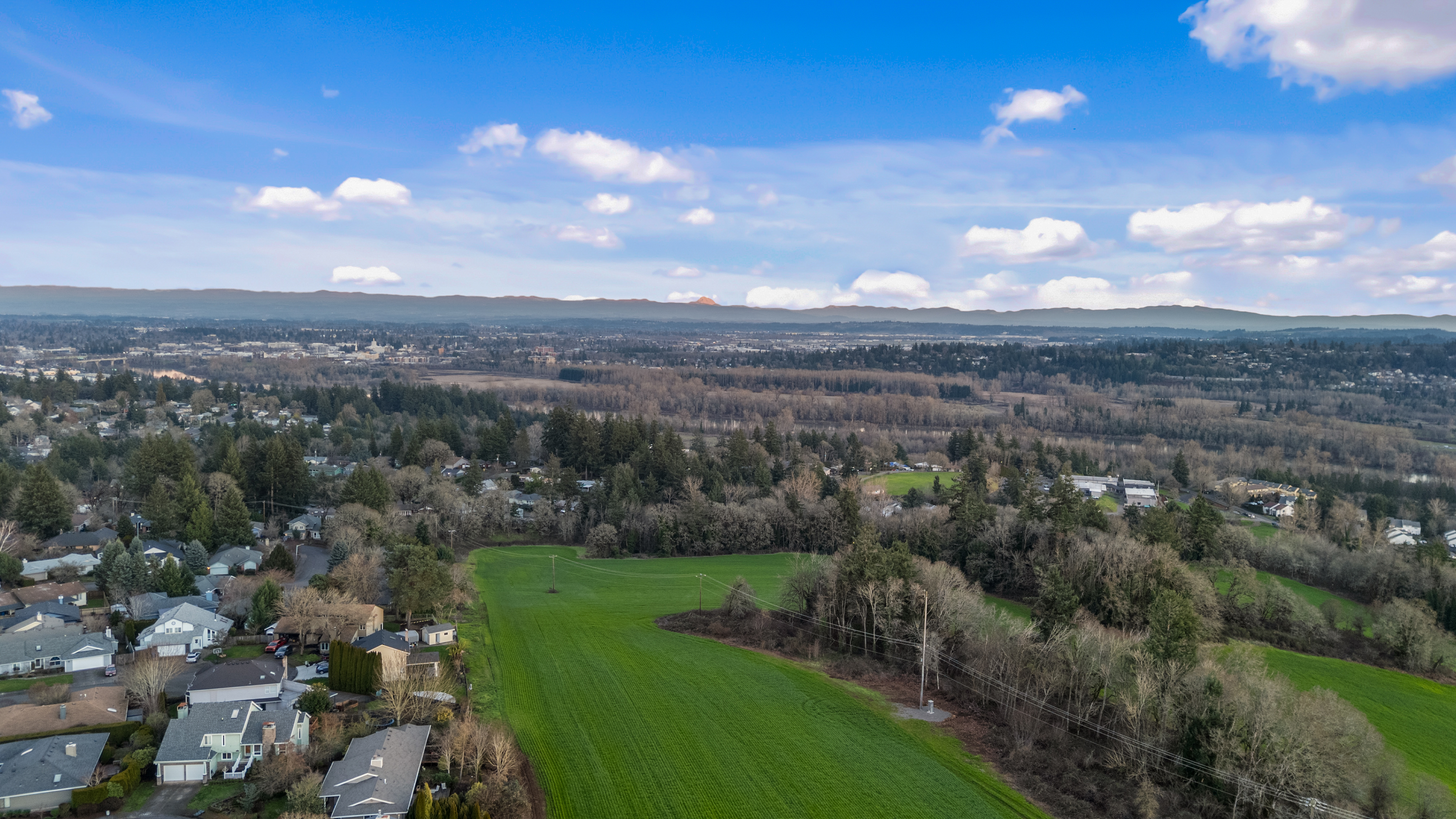
Salem Oregon residential neighborhood with Cascade foothills in background, representing home price growth in 2026

Salem Oregon Home Prices 2026: How 161% Growth Since 2012 Affects Sellers Today

Salem Oregon home prices in 2026 tell a remarkable story for long-time homeowners. The average sales price has climbed from $196,867 in 2012 to $512,600 so far in 2026 — a staggering 161% increase. If you've owned your Salem-area home for five, ten, or fifteen years, there's a strong chance you're sitting on far more equity than you realize. Even in today's more cautious market, the decade-long appreciation trend means your net worth has grown significantly — and this may be the moment to put it to work.

What Have Salem Oregon Home Prices Done Since 2012?

Salem Oregon home prices have increased 161% since 2012, rising from an average sales price of $196,867 to $512,600 YTD in 2026. The median sale price followed the same trajectory, climbing from $169,000 to $455,000 over the same period. That's not a typo — Salem homeowners have watched their property values more than double in roughly fourteen years.

To put those numbers in human terms: a homeowner who purchased a median-priced Salem home in 2012 for $169,000 is sitting on a home now worth approximately $455,000. That's over $286,000 in raw value appreciation — before you even factor in the principal they've paid down on their mortgage. For many long-time Salem residents, their home has quietly become the most valuable asset they own.

This growth didn't happen overnight. It unfolded in waves — a steady climb through the mid-2010s, an acceleration during the pandemic-era housing surge of 2020–2022, and a normalization period since then. Even as the market cooled from its peak frenzy, prices didn't collapse back to 2012 levels. Not even close. The floor rose dramatically, and it has largely held.

Why Did Salem Home Values Rise So Dramatically Over the Past Decade?

Salem's 161% price appreciation was driven by a confluence of factors: chronically low housing inventory, population growth in Marion and Polk Counties, the city's relative affordability compared to Portland, remote-work migration into the Willamette Valley, and historically low interest rates through 2021. These demand drivers consistently outpaced new supply, pushing prices higher year after year.

Salem's position in the Willamette Valley has always made it attractive — it's the state capital, it's home to Willamette University and major healthcare employers like Salem Health, and it sits at the intersection of I-5 and OR-22, making commutes to Portland, Corvallis, and the coast manageable. But the pandemic era supercharged demand as buyers from the Portland metro, California, and beyond discovered that Salem offered more home for less money.

Buyers who couldn't afford Portland started looking south. Remote workers who could live anywhere chose Salem for its livability, its Cascade mountain backdrop, and its vibrant downtown scene. Families relocated to Keizer and South Salem for the Salem-Keizer school district options. And all of that demand chased a housing stock that simply wasn't growing fast enough to keep pace.

The result? Sellers held extraordinary leverage for most of the past decade. And while the market has moderated since the 2022 peak — interest rates rose, buyer urgency cooled — the baseline value established by that decade-long run remains stubbornly, wonderfully high for homeowners.

How Does the 2026 Salem Market Compare to Peak Prices?

Salem's 2026 average sale price of $512,600 reflects a modest pullback from the 2022 peak, but remains dramatically above pre-pandemic levels. Sellers should not mistake a softer market for a collapsed one — values are still more than double what they were in 2012, and well-prepared, well-priced homes continue to sell to motivated buyers.

Think of it this way: if the market ran a 100-yard dash and peaked at the finish line in 2022, it's now sitting around the 95-yard mark. It backed up a little. But it is nowhere near the starting line. Anyone who bought before 2020 has still accumulated extraordinary equity, and anyone who bought before 2018 is likely sitting on gains that would have seemed impossible to predict at the time of purchase.

What's different in 2026 compared to 2021 and 2022 is the nature of the transaction. Multiple-offer bidding wars are less common. Buyers are negotiating again. Homes need to be priced correctly and presented well to move in a reasonable timeframe. But "priced correctly" in 2026 still means prices that would have been unimaginable in 2012. The market has matured — it hasn't retreated.

For sellers, this distinction matters enormously. A softer market doesn't mean you should wait. It means you should prepare strategically, price with precision, and work with agents who understand where buyer demand is actually concentrated in the current Salem market.

Learn more about the best time to sell a home in Salem, Oregon

What Does 161% Appreciation Mean for Your Equity Position as a Salem Homeowner?

A Salem homeowner who purchased at the 2012 median of $169,000 with a standard 20% down payment and made fourteen years of mortgage payments likely has $300,000 or more in accessible equity today. That equity can fund a retirement move, a right-sizing purchase, an investment property, or simply a fresh chapter — it's real, liquid wealth waiting to be activated.

Let's walk through a realistic scenario. Say you bought a home in West Salem or South Salem in 2013 for $215,000. You put 5–10% down and have been paying your mortgage for over a decade. Even accounting for what you still owe, your equity position today — with the home now worth somewhere in the $480,000–$530,000 range — could easily exceed $250,000 to $300,000.

That's not a paper number. That's a down payment on your next chapter. It's a debt-free move to a smaller home in Silverton or Independence. It's seed capital for a rental property in Woodburn or McMinnville. It's the financial security that allows you to help your kids with their own down payment. The options multiply when you truly understand what you've built.

Many long-time Salem homeowners we talk to are genuinely surprised when they see a current market valuation. They've been living in their home, not tracking Zillow obsessively, and they're operating on a mental number that's $100,000 or more below where the market actually sits. Knowing your real equity position is the first step to making any smart decision about what comes next.

Is Now a Good Time to Sell a Home in Salem, Oregon?

For long-time Salem homeowners, 2026 remains a favorable time to sell despite the market's moderation from its 2022 peak. Inventory is still below historical norms, motivated buyers are active — particularly in the $400,000–$550,000 range — and the equity available to sellers today represents a generational wealth opportunity that most financial instruments can't match.

Here's the honest picture: the perfect market — the one where every home sold in two days with five offers — has passed. But "perfect" was also chaotic, stressful, and sometimes led to sellers accepting terms they didn't fully understand in the heat of the moment. Today's market rewards preparation and strategy. Sellers who invest in light staging, accurate pricing, and professional photography consistently achieve strong outcomes.

The buyers who are active right now are serious. They've been pre-approved in a higher-rate environment. They've done their research. They know what they want, and when a home checks their boxes, they move. That kind of buyer — decisive, financially qualified, motivated — can be your ideal buyer if your home is positioned correctly.

Timing also has a local dimension. In Salem, spring and early summer historically produce the most buyer activity, but well-priced homes in desirable neighborhoods like South Salem, Creekside, and the areas near Pringle Creek and Bush Park move throughout the year. If your home is in good condition and priced to reflect current realities, you're not at the mercy of a single selling season.

See our complete guide to preparing your Salem home for sale

What Should Salem Sellers Expect in Terms of Net Proceeds?

A Salem seller in 2026 can typically expect net proceeds equal to their current home value minus their remaining mortgage balance, agent commissions (typically 5–6%), closing costs (1–3%), and any negotiated repair credits. On a $480,000 sale with $150,000 remaining on the mortgage, a seller might realistically net $270,000–$300,000 in hand at closing.

Working backwards from a real number helps demystify the process. Let's use a $475,000 sale price — reasonable for a well-maintained three-bedroom home in South Salem or Keizer in 2026. Subtract approximately $26,000–$28,500 in commission, $6,000–$10,000 in closing costs and potential concessions, and whatever mortgage payoff remains. The remainder is yours.

For homeowners who purchased before 2018 and have been paying their mortgage steadily, the payoff balance is likely modest relative to today's value. That gap — between a small payoff and a large sale price — is where your equity lives. Getting a precise payoff statement from your lender and pairing it with a current market valuation from an experienced local agent gives you a clear, accurate picture of what selling actually puts in your pocket.

We also encourage sellers to think about the tax implications. Oregon has no capital gains exemption beyond the federal exclusion ($250,000 for single filers, $500,000 for married couples filing jointly on a primary residence). Many Salem homeowners who have lived in their home for at least two of the last five years can exclude a substantial portion — or all — of their gain from federal taxes. For others, especially those who have seen extraordinary appreciation, it's worth a conversation with a CPA before listing.

How Do Salem Home Prices Compare to Nearby Willamette Valley Cities?

Salem's 2026 average sale price of $512,600 positions it as a mid-range market within the Willamette Valley. Corvallis and Lake Oswego run higher, while Woodburn, Monmouth, and Independence remain more affordable — making Salem a regional sweet spot that continues to attract buyers priced out of the Portland metro and university towns.

Corvallis, driven by Oregon State University and a high-income professional demographic, consistently posts median prices above Salem's. McMinnville — popular with wine country buyers and Portland commuters — has seen its own dramatic run-up. Silverton and Stayton offer more modest price points but have also appreciated significantly.

For sellers, this regional context is important: Salem's price gains are not an outlier. They reflect a broad Willamette Valley trend of rising values. But Salem's size, amenity base, and employment diversity give it staying power that smaller communities may not have. Buyers who want walkability, healthcare infrastructure, good schools, and regional access keep coming back to Salem — and that sustained demand is your best long-term argument for value.

Frequently Asked Questions

What is the average home price in Salem, Oregon in 2026?

The average sales price for a home in Salem, Oregon in 2026 is approximately $512,600 year-to-date, up from an average of $196,867 in 2012. The median sale price in 2026 is around $455,000, compared to $169,000 in 2012. These figures represent a 161% increase over fourteen years and reflect sustained demand across the Willamette Valley region.

How much equity does the average Salem homeowner have in 2026?

Equity varies widely based on purchase date, down payment, and mortgage payoff progress, but long-time Salem homeowners have seen extraordinary gains. Someone who purchased at the 2012 median of $169,000 now owns a home worth roughly $455,000. After accounting for their remaining mortgage balance and years of principal paydown, many are sitting on $200,000–$350,000 or more in accessible equity.

Is the Salem, Oregon housing market slowing down in 2026?

The Salem market has moderated from the frenzied pace of 2021–2022, but it has not collapsed. Home values remain dramatically above pre-pandemic levels, inventory is still below historical norms, and qualified buyers are actively purchasing. Sellers can expect longer days on market than during the peak years, but well-priced, well-prepared homes continue to close at strong prices.

What are typical closing costs for a home seller in Salem, Oregon?

Salem-area sellers typically pay 5–6% of the sale price in real estate commissions, plus 1–3% in additional closing costs including title fees, escrow charges, recording fees, and any negotiated repair credits or concessions. On a $475,000 sale, total selling costs generally run between $28,000 and $42,000, depending on terms negotiated. Your net proceeds are the sale price minus these costs and any remaining mortgage payoff.

How do I find out what my Salem home is worth in today's market?

The most accurate way to determine your Salem home's current market value is to request a Comparative Market Analysis (CMA) from a local real estate agent who actively works in your neighborhood. Online estimates from Zillow and similar tools can be a starting point, but they frequently miss recent sales data, condition factors, and hyper-local demand signals that significantly affect value. The Wisser Homes Team offers free, no-obligation home valuations for Salem-area homeowners.

Find Out What Your Salem Home Is Worth Today — Free

You've built real wealth in your home. The question is: exactly how much? Gavin and Julie Wisser will personally analyze your home's current market value — no algorithms, no generic estimates. Just a real, local assessment based on what homes in your neighborhood are actually selling for right now in 2026.

Our free home valuation includes a full Comparative Market Analysis, a breakdown of your estimated net proceeds, and a no-pressure conversation about your options. Whether you're ready to list next month or just starting to think about it, knowing your number costs you nothing and changes everything.

Request Your Free Salem Home Valuation →

Categories

Seller Strategy
home

Are you buying or selling a home?

Buying
Selling
Both
home

When are you planning on buying a new home?

1-3 Mo
3-6 Mo
6+ Mo
home

Are you pre-approved for a mortgage?

Yes
No
Using Cash
home

Would you like to schedule a consultation now?

Yes
No

When would you like us to call?

Thanks! We’ll give you a call as soon as possible.

home

When are you planning on selling your home?

1-3 Mo
3-6 Mo
6+ Mo

Would you like to schedule a consultation or see your home value?

Schedule Consultation
My Home Value

or another way