
Published March 27, 2026
West Salem vs South Salem: Which Neighborhood Is Right for You in 2026?

West Salem vs South Salem: Which Neighborhood Is Right for You in 2026?
If you're shopping for a home in Salem, Oregon, one of the first questions we hear is: "Should I look at West Salem vs South Salem?" These two popular areas dominate the Salem housing market, and for good reason — both offer excellent schools, strong community vibes, and solid long-term value. But they're different in meaningful ways that can make or break your homebuying decision.
As Salem-based real estate agents who've helped dozens of families choose between West Salem and South Salem, we've seen firsthand how these neighborhoods fit different lifestyles, budgets, and priorities. In this guide, we'll break down everything you need to know — pricing, schools, commutes, amenities, and resale trends — so you can make the right call for your family in 2026.
West Salem vs South Salem: The Big Picture
West Salem and South Salem are both family-friendly, well-established areas with strong appeal to Salem homebuyers. But the vibe and practical considerations are distinct:
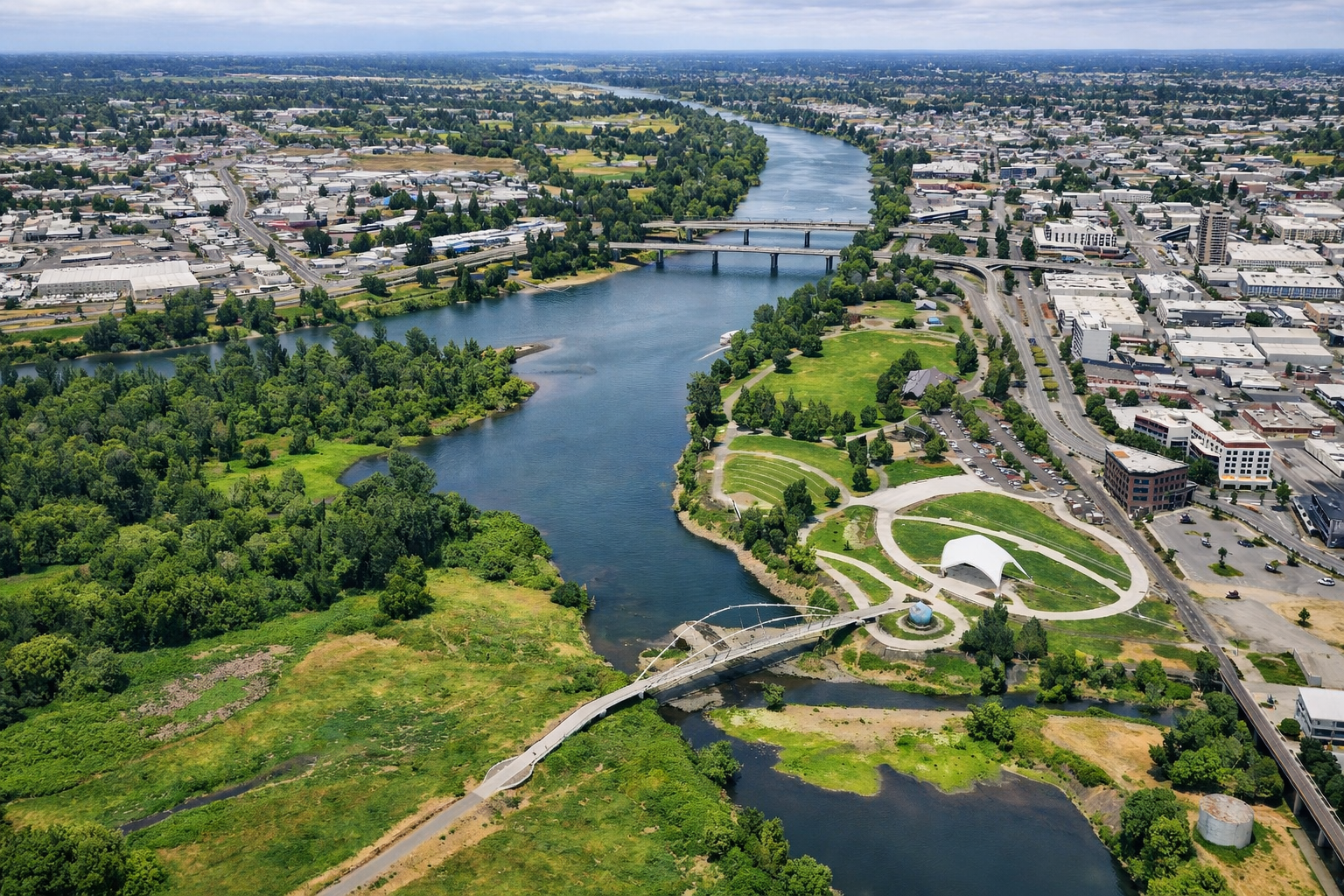
West Salem sits across the Willamette River, connected to downtown Salem via the Marion Street and Center Street bridges. It's geographically smaller, hillier, and feels more intimate — many buyers describe it as having a "small-town" character even though you're minutes from downtown. The riverfront location and Edgewater District have added walkable retail and dining in recent years.
South Salem sprawls south from Commercial Street to the Cascade foothills, encompassing everything from older mid-century neighborhoods near Bush's Pasture Park to newer subdivisions along Kuebler Boulevard. It's the largest residential area in Salem by population, with more inventory, more price diversity, and easier freeway access for Portland commuters.
Neither is "better" — they just serve different buyer profiles. Let's dig into the details.
Home Prices: West Salem vs South Salem in 2026
As of January 2026, median home prices in West Salem are running around $485,000 for a single-family home. You'll find mostly 1960s–1990s-era construction, with some newer infill development near the Edgewater District. Lot sizes tend to be smaller (6,000–8,000 square feet is typical), and many properties sit on hillside terrain with river or valley views.
South Salem has a wider price range due to its size and diversity. The overall median is closer to $510,000, but that spans everything from $425,000 starter homes in older neighborhoods near Fairmount Hill to $650,000+ new construction along Kuebler and in the foothills. South Salem's larger inventory means more options at every price point.
Days on market: Both areas are moving quickly in early 2026. West Salem homes averaged 22 days on market in December 2025; South Salem was at 26 days. Inventory remains tight across Salem, so well-priced homes in either area can see multiple offers.
If you're a first-time buyer or working with a tighter budget, South Salem gives you more flexibility. If you want a unique property with character and don't mind older construction, West Salem's charm might be worth the trade-off. Download our Salem Neighborhood Comparison Guide for detailed price breakdowns by sub-neighborhood and home age.
Schools: Salem-Keizer District Differences
Both West Salem and South Salem are served by the Salem-Keizer School District, but the specific schools differ — and that matters to families.
West Salem is primarily served by Kalapuya Elementary, Stephens Middle School, and West Salem High School. West Salem High has a strong academic reputation and active sports programs. The smaller geographic footprint means most West Salem neighborhoods feed into the same schools, creating tight-knit school communities.
South Salem has multiple elementary and middle schools depending on your exact location — Schirle, Swegle, Auburn, Candalaria, and others. Most South Salem neighborhoods feed into South Salem High School, which is one of the largest and most diverse high schools in the district, known for strong arts programs and athletics. Some far-south neighborhoods near Kuebler are zoned for Sprague High School.
If school boundaries are a deciding factor, check our guide to Salem-Keizer schools or contact us — we can pull exact boundary maps for any address you're considering.
Lifestyle and Amenities: Urban vs Suburban Feel
This is where West Salem and South Salem diverge most clearly.
West Salem has a more urban-adjacent feel. You're a quick bridge ride to downtown Salem, Willamette University, the State Capitol, and riverfront parks. The Edgewater District on the west bank has added brewpubs, coffee shops, and a Saturday farmers market. Wallace Marine Park offers riverside trails and summer concerts. West Salem feels walkable and connected, especially if you live near the commercial core along Edgewater Avenue.
The hillier terrain means great views but also steeper lots, more stairs, and less flat yard space. Many West Salem homes were built in the '60s and '70s with quirky layouts and character — some buyers love that, others want move-in-ready modern finishes.
South Salem is more quintessentially suburban. You'll find larger lots, flatter yards, cul-de-sac streets, and newer construction. It's quieter, more family-oriented, and designed around car access — most South Salem neighborhoods aren't walkable to retail, but you have easy access to big-box shopping along Commercial Street, Kuebler Boulevard, and South Salem's retail corridor.
Outdoor recreation is a major draw: Bush's Pasture Park, Minto-Brown Island Park, and the foothills trail system are all in or near South Salem. If you want a big backyard, proximity to hiking, and a classic suburban lifestyle, South Salem delivers.
Commute and Transportation: Which Is More Convenient?
Commute patterns often tip the scale between West Salem vs South Salem.
West Salem works well if you work in downtown Salem, at the State Capitol, or at Willamette University — you're 5–10 minutes away. However, if you commute to Portland or Keizer, the bridges can be a bottleneck during morning and evening rush hours. Traffic backups on the Marion Street Bridge are common, and there are only two bridge crossings (Marion and Center) connecting West Salem to the rest of the city.
South Salem has better freeway access for Portland commuters — you can hop on I-5 north via Kuebler Boulevard or Commercial Street and be in Portland in 45–60 minutes (traffic depending). It's also more convenient if you work in South Salem's commercial corridor or need to reach McMinnville, Corvallis, or Eugene via Highway 99 or I-5 south.
If you work from home or have flexible hours, the commute difference is negligible. If you're driving to Portland or the north Willamette Valley daily, South Salem's freeway access is a real advantage. If you want a short walk or bike ride to downtown Salem, West Salem wins.
Resale Value and Investment Potential
Both West Salem and South Salem have appreciated steadily over the past decade, and we expect that trend to continue through 2026 and beyond. Salem's strong job market (state government, healthcare, education) and relative affordability compared to Portland keep demand high.
West Salem has seen strong appreciation due to limited inventory and growing appeal among buyers who want walkable, river-adjacent living. The Edgewater District redevelopment has boosted property values near the waterfront. However, the older housing stock means some homes need updates, which can affect resale if you don't invest in modernization.
South Salem offers more predictable resale value due to its larger market and diverse inventory. Newer construction in the foothills and along Kuebler tends to hold value well. The trade-off is less scarcity — there's more competition when you sell, so staging and pricing matter more.
Long-term, both neighborhoods are solid bets. West Salem's uniqueness and limited supply give it an edge for appreciation potential, but South Salem's liquidity and buyer pool make it easier to sell when the time comes. For detailed resale data and net proceeds estimates, check our seller strategy guide.
What Type of Buyer Fits Each Neighborhood?
After working with dozens of Salem homebuyers, we've noticed clear patterns in who thrives in each area.
West Salem is great for:
- Buyers who want a walkable, urban-adjacent lifestyle with riverfront access
- Families who prioritize proximity to downtown Salem and unique home character
- State government employees or Willamette University faculty/staff with short commutes
- Buyers who don't mind older homes and are willing to invest in updates
- Empty nesters or young professionals who want a smaller, more intimate community feel
South Salem is great for:
- Families who want newer construction, larger lots, and suburban amenities
- Portland commuters who need easy I-5 access
- Buyers seeking big backyards, flat lots, and outdoor recreation proximity
- First-time buyers who want more inventory and price options
- Anyone prioritizing modern finishes and move-in-ready homes
Neither neighborhood is "better" — it's about fit. If you're still unsure, we recommend driving both areas at different times of day, visiting the schools, and walking the commercial districts. Feel free to reach out — we're happy to set up a neighborhood tour tailored to your priorities.
Frequently Asked Questions: West Salem vs South Salem
Is West Salem or South Salem more expensive?
South Salem has a slightly higher overall median price ($510,000 vs $485,000 in West Salem as of early 2026), but South Salem's wider price range means you can find more affordable starter homes. West Salem's inventory is smaller and tends to be older, which can mean lower purchase prices but higher renovation costs. The "better deal" depends on your budget and what you're looking for.
Which neighborhood has better schools?
Both areas are served by the Salem-Keizer School District, and both have strong schools. West Salem High and South Salem High are both well-regarded, with different strengths (West Salem is known for academics and sports; South Salem for arts and diversity). Elementary and middle school quality varies by specific school, so we recommend researching the exact schools for any home you're considering.
Is West Salem harder to access than South Salem?
Yes, if you're commuting to Portland or other parts of Salem. West Salem is connected to the rest of Salem by only two bridges (Marion and Center), which can bottleneck during rush hour. South Salem has direct freeway access and doesn't rely on bridge crossings. If you work downtown Salem or in West Salem itself, access is easier from West Salem.
Which neighborhood is better for families?
Both are excellent for families, but in different ways. West Salem offers a tight-knit, walkable community with riverfront parks and proximity to downtown. South Salem offers larger yards, newer parks, and more space for kids to roam. Families who want suburban space and outdoor recreation tend to prefer South Salem; families who want walkability and urban convenience lean toward West Salem.
Which area has better resale value?
Both West Salem and South Salem have strong long-term appreciation trends. West Salem's limited inventory and unique riverfront location give it scarcity value, which can drive higher appreciation. South Salem's larger market and newer construction make it easier to sell but with more competition. For most buyers, resale value will depend more on the specific home's condition and location than the neighborhood alone.
Ready to Explore West Salem and South Salem?
Choosing between West Salem vs South Salem comes down to your lifestyle, commute, budget, and long-term goals. Both neighborhoods offer strong community, excellent schools, and solid real estate value — you really can't go wrong with either choice.
The best way to decide? See them in person. We'd love to walk you through both areas, show you current listings, and help you weigh the trade-offs based on what matters most to your family.
Download our free Salem Neighborhood Comparison Guide for detailed pricing, school maps, commute times, and buyer checklists for West Salem, South Salem, and other Salem-area neighborhoods. Or reach out directly — we're here to help you find the right fit.
or another way