

What Buyers Notice in the First 10 Seconds of Viewing Your Salem Home
Home first impressions in Salem can make or break your sale — and we mean that literally. In a market where buyers are scrolling dozens of listings and scheduling back-to-back showings on a Saturday afternoon, the emotional decision about whether a home feels "right" happens faster than most sellers realize. Research consistently shows that buyers form their gut reaction within the first 7 to 10 seconds of arriving at a property. That's before they've opened a single cabinet, tested a faucet, or asked about the school district. If those first 10 seconds land flat — or worse, trigger a red flag — even a perfectly priced Salem home can sit unsold far longer than it should.
We've walked hundreds of Salem-area homes with buyers, and we've watched those first reactions play out in real time. The sharp intake of breath when a porch is freshly painted. The subtle hesitation at a dark entryway. The quiet but decisive "I don't know, it just doesn't feel right" comment that's actually about the smell. These aren't superficial reactions — they're the emotional signals that drive offers. Here's exactly what buyers notice first, and what you can do about it before your listing goes live.
First Impressions Start Before the Front Door: Curb Appeal in Salem
The first impression of your Salem home doesn't begin at the threshold — it begins the moment a buyer turns onto your street. In neighborhoods like South Salem's Morningside, the tree-lined blocks of West Salem near Wallace Marine Park, or the established streets of the Lansing area in Keizer, buyers are already forming opinions as they pull up to the curb.
Here's what registers instantly from the street:
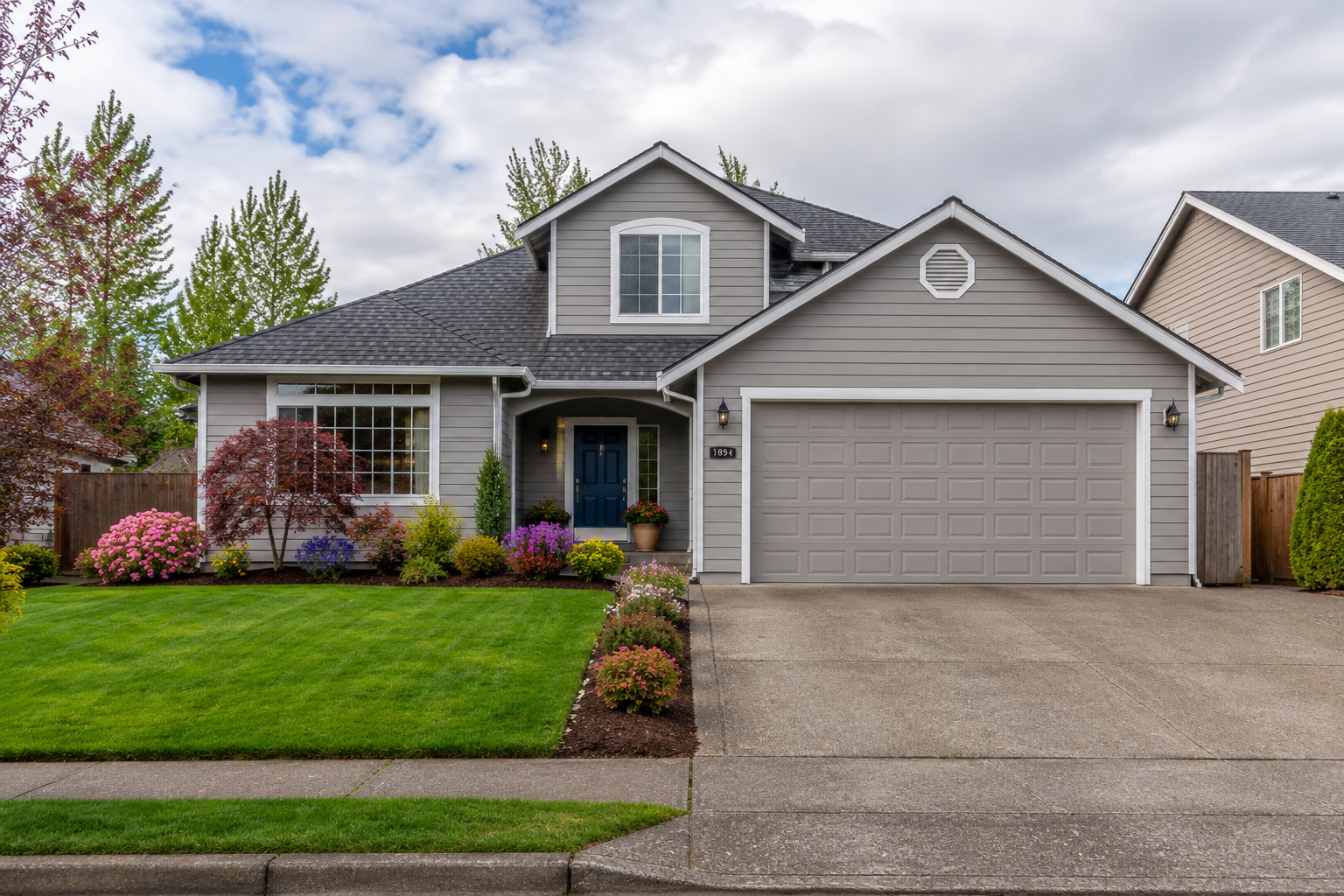
- Lawn condition: An overgrown or patchy lawn signals neglect — even if everything inside is immaculate. In the Willamette Valley, we're lucky to have a long growing season, which means a lawn that isn't actively cared for stands out. Mow, edge, and overseed any bare patches at least two weeks before photos are taken.
- The driveway and walkway: Cracked concrete, oil stains, or moss-covered pavers (extremely common here given our wet winters) are noticed immediately. Pressure washing costs very little and returns enormously on that first visual impression.
- The front door: This is the single highest-ROI cosmetic improvement you can make. A freshly painted front door — in a color that complements your home's exterior — signals care and pride of ownership. Navy, deep green, and classic black are all performing well in Salem listings right now.
- Plants and beds: You don't need a landscape architect. Clean, mulched beds with a few healthy plants tell buyers this home has been loved. Dead or leggy shrubs do the opposite.
- Gutters and roofline: Buyers and their agents look up. Sagging gutters, moss on the roof (again, a Willamette Valley reality), or visible damage to the fascia all raise inspection red flags before anyone sets foot inside.
If your home is listed in spring — which is peak season in Salem — you have a natural advantage. Flowering trees, green lawns, and blooming beds photograph beautifully. Use that seasonal moment. If you're listing in the gray stretch of November through February, strategic lighting and a clean, well-maintained exterior matter even more.
See our complete guide to boosting curb appeal before listing your Salem homeThe Entryway: 10 Seconds Inside That Set the Tone for Everything
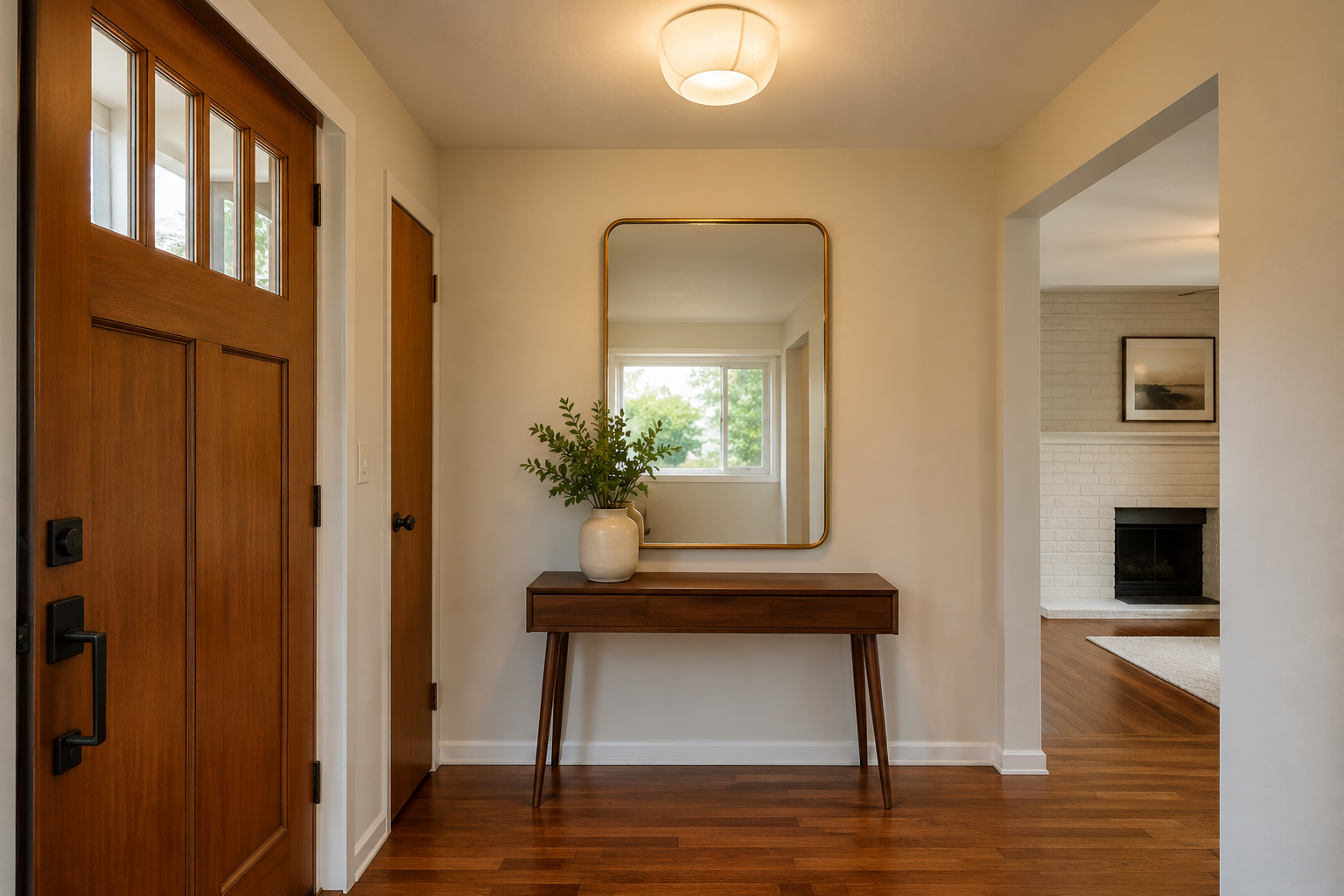
The moment a buyer steps through your front door, the clock is running. What they experience in the entryway — the foyer, the landing, the first visible sightline — shapes how they feel about every single room that follows. A strong entry creates momentum. A weak one creates doubt that follows buyers through the entire showing.
Here's what we see buyers react to immediately in the entryway:
Sightlines and Flow
What does the buyer see the moment the door swings open? If the answer is a cluttered coat closet, a wall of family photos, or a dark hallway, that's the first thing you need to address. Ideally, the entry should open toward a focal point — a clean living room, a view through to a bright kitchen, or even a simple piece of art on a well-lit wall. Remove anything that interrupts that initial sightline.
Ceiling Height and Volume
Many Salem homes — particularly the ranch-style builds of the 1960s–80s that are so common in areas like Four Corners or North Salem — have lower ceilings in the entry than buyers accustomed to newer construction might expect. You can't change the architecture, but you can use vertical elements (a tall mirror, vertical artwork, slim floor lamps) to draw the eye upward and make the space feel more expansive.
Flooring Condition
Whatever is on the floor at the entry gets scrutinized. Scuffed hardwoods, worn carpet, or outdated vinyl tile all land in that first sweep of the eyes. If your entryway flooring is in rough shape and full replacement isn't in the budget, a well-placed rug — tasteful, not too small — can redirect attention while you address other priorities.
Clutter and Personal Items
Shoes by the door, a pile of mail on a bench, kids' backpacks hanging from hooks — all of it needs to go for showings. We know that's a real ask when you're living in the home, but the entryway is prime psychological real estate. Keep it cleared, styled simply, and easy for buyers to mentally "move into."
The Smell Factor: The Most Underestimated Element of Home First Impressions in Salem
We'll say it plainly because sellers need to hear it: smell is the most common reason a buyer walks out of a home feeling vaguely negative but unable to articulate why. Odor bypasses conscious reasoning and goes straight to emotion. And the cruel truth is that if you've lived in your home for years, you've almost certainly stopped noticing the smells that are obvious to every buyer who walks in.
The most common offenders we encounter in Salem-area homes:
- Pets: Dog and cat odors embedded in carpet, upholstery, and subflooring are incredibly hard to mask. The only real solution is professional cleaning — and in some cases, carpet replacement. If you have pets, ask a trusted friend who doesn't have pets to walk through and give you an honest assessment.
- Cooking: The Willamette Valley's food culture is something we love — but the lingering smell of last night's curry or yesterday's fish doesn't help your listing. Increase ventilation, clean your range hood filter, and avoid strong-smelling cooking in the days before showings.
- Mustiness and moisture: Given our rainy climate, basement moisture and musty smells are a real issue for many Salem homes. If a buyer smells mildew, they immediately start worrying about mold, foundation issues, and water intrusion. Address the source — a dehumidifier isn't a solution if there's an underlying moisture problem — and disclose appropriately.
- Aggressive air fresheners: Counterintuitively, heavy plug-in air fresheners or excessive candles signal to buyers that you're trying to hide something. Aim for neutral and clean. Open windows when weather allows. Bake something simple the morning of a showing if you want a gentle, welcoming scent.
The smell of a home should be nothing. Clean, fresh air is the goal. Everything else competes.
Light: The Element That Makes Salem Homes Feel Alive
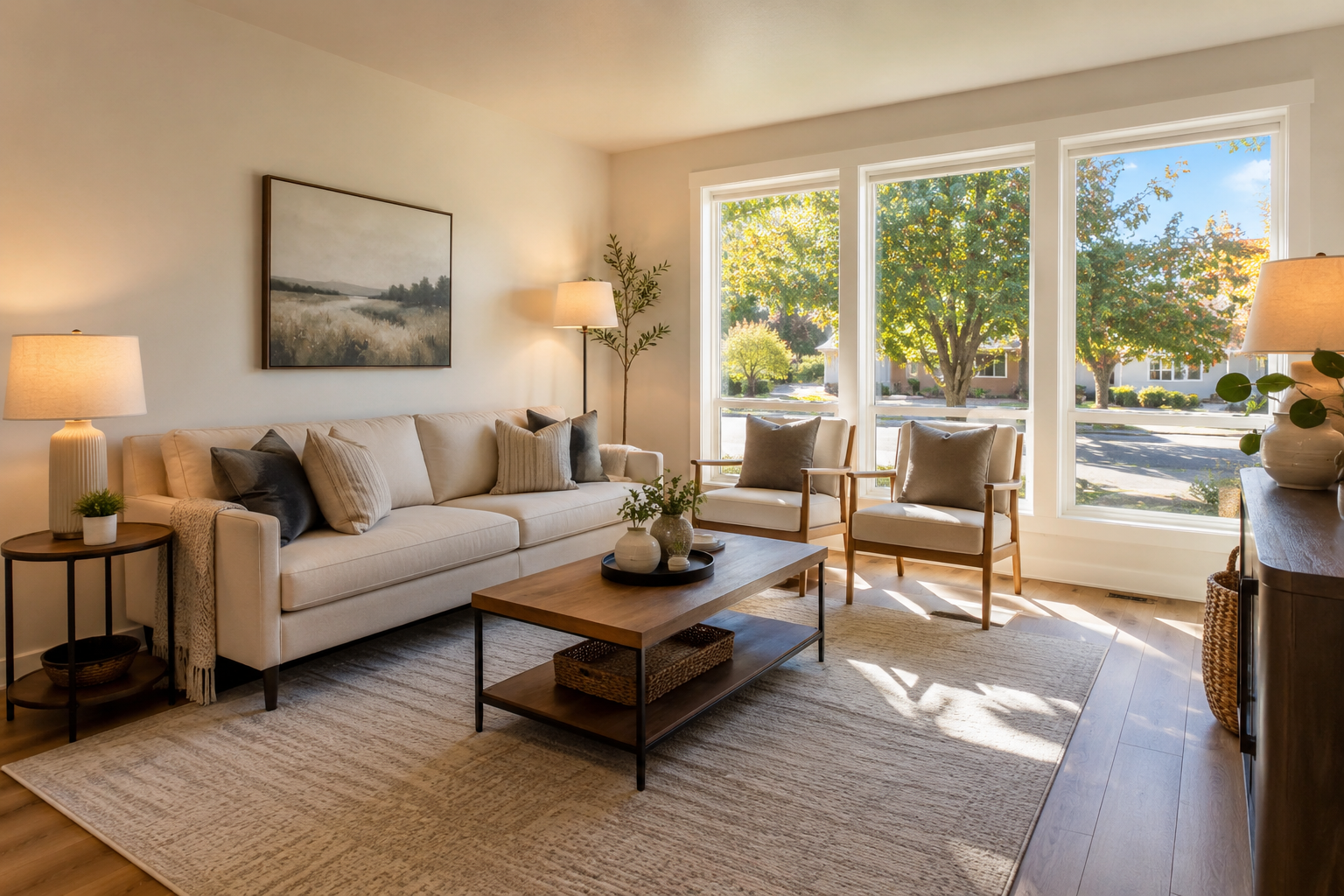
Natural light is one of the most consistently cited factors in buyer satisfaction surveys — and it's no surprise. Here in the Willamette Valley, we spend a fair portion of the year under overcast skies, which means buyers are genuinely drawn to homes that feel bright and sun-filled. A dark home in Salem can feel heavy and small even when it isn't.
Before every showing, this is our standard checklist for light:
- Open every blind and curtain — completely. Let in every lumen of natural light available.
- Turn on every light in the house, including closets, hallways, and under-cabinet kitchen lighting.
- Replace any burned-out bulbs. (You'd be surprised how often this gets missed.)
- Swap cool fluorescent bulbs in key rooms for warm LED equivalents. The color temperature of your light affects how the space feels.
- If a room has a north-facing window with limited natural light, consider adding a strategically placed mirror to bounce available light around the space.
- Clean your windows. Inside and out. The difference in light transmission between clean and dirty glass is noticeable, especially on a partly cloudy Oregon day.
If your home has a particularly dark corner that you've always worked around — a sunken family room, a windowless dining area — discuss with your agent whether supplemental staging lighting might make sense. A well-placed floor lamp or a brighter overhead fixture can meaningfully change how a space photographs and shows.
The Overall Sense of Care: What Buyers Are Really Assessing
Beyond the specific checklist items, what buyers are really reading in those first 10 seconds is a deeper signal: Has this home been taken care of? That question — which buyers are asking subconsciously, not out loud — determines how aggressively they'll pursue the property and how much scrutiny they'll apply once the inspection report lands.
A home that signals care says: the sellers are responsible, the systems probably work, the inspection won't be a horror show, and buying this home is a lower-risk decision. A home that signals neglect does the opposite — even if the actual condition is fine.
Signs of care that buyers notice in the first pass:
- Freshly painted trim and baseboards (or at minimum, touched up)
- Hardware that matches and functions — doors that open smoothly, locks that work, cabinet pulls that haven't been painted over
- Clean grout lines, especially in entryway tile and bathrooms visible from the hall
- A mailbox that isn't rusted or crooked
- House numbers that are clearly visible from the street (also important for buyers finding your home!)
None of these are expensive. All of them communicate volumes.
Your Pre-Listing Action Plan: The Home Sale Preparation Checklist
We know this is a lot to absorb, which is exactly why we put together our free Home Sale Preparation Checklist — a room-by-room guide that walks you through everything you need to address before your Salem home hits the market. From curb appeal punch-list items to the interior details that buyers and agents notice most, it's designed to make your prep systematic and stress-free.
👉 Download your free Home Sale Preparation Checklist and walk through your home with fresh eyes before your listing goes live. It could mean the difference between a quick, competitive offer and weeks of price reductions.
Frequently Asked Questions About Home First Impressions in Salem
- How much does curb appeal actually affect the sale price of a Salem home?
- Curb appeal has a meaningful impact on both speed of sale and final price. Studies from the National Association of Realtors suggest that strong curb appeal can add 7–14% to a home's perceived value and significantly reduces time on market. In competitive Salem neighborhoods like South Salem or West Salem, where buyers are making quick decisions between similar listings, curb appeal is often the deciding factor in which home gets a showing — and which doesn't.
- What's the most cost-effective improvement I can make before listing my Salem home?
- A freshly painted front door consistently delivers one of the highest returns of any pre-listing investment. Beyond that, professional deep cleaning — including carpets, windows, and all surfaces — costs a few hundred dollars and affects every single room. If you can only do a few things before listing, clean thoroughly, declutter aggressively, and paint the front door. Those three steps alone can dramatically shift buyer perception.
- How do I know if my home has odors that buyers will notice?
- The honest answer is that you probably can't fully assess it yourself because you've become accustomed to your home's scent over time. We recommend asking a non-smoker friend or family member who doesn't have pets to walk through and give you an honest opinion. You can also ask your real estate agent — we'll always give you a straight answer, because unaddressed odor is one of the most common reasons homes sit on the market longer than they should.
- Should I do a pre-listing home inspection before selling my Salem home?
- A pre-listing inspection is worth serious consideration, especially if your home is older or has deferred maintenance. It lets you identify and address issues before buyers find them — which means you control the narrative rather than negotiating from a defensive position after an offer is already on the table. In the Salem market, sellers who have done their homework and can provide a clean pre-inspection report often see stronger, cleaner offers. Talk to your agent about whether this makes sense for your specific situation.
- How early before listing should I start preparing my Salem home for sale?
- Ideally, 4 to 6 weeks before your target list date. This gives you time to complete any needed repairs, do a deep clean and declutter, have professional photos taken, and address curb appeal without feeling rushed. If you have bigger projects — new paint throughout, flooring replacement, landscaping overhaul — plan for 8 to 12 weeks. We're always happy to do a walkthrough well before you're ready to list so you can prioritize where to spend your time and budget most effectively.
Ready to Make a Powerful First Impression with Your Salem Home?
Gavin and Julie Wisser have helped Salem-area sellers prepare, price, and market their homes for years — and we know exactly what buyers in this market respond to. Whether you're planning to list this spring or just starting to think about your options, we'd love to walk through your home with you and give you an honest, experience-backed assessment of where to focus your energy.
Download our free Home Sale Preparation Checklist to get started today — it's the same room-by-room framework we use with every seller we work with. Then give us a call or send a message. We're here to help you sell confidently and for the best possible outcome.
Contact the Wisser Homes Team | Download the Free Home Sale Preparation Checklist