
Categories
Neighborhood SpotlightsPublished September 8, 2026
Best Neighborhoods in Salem, Oregon: Complete 2026 Guide

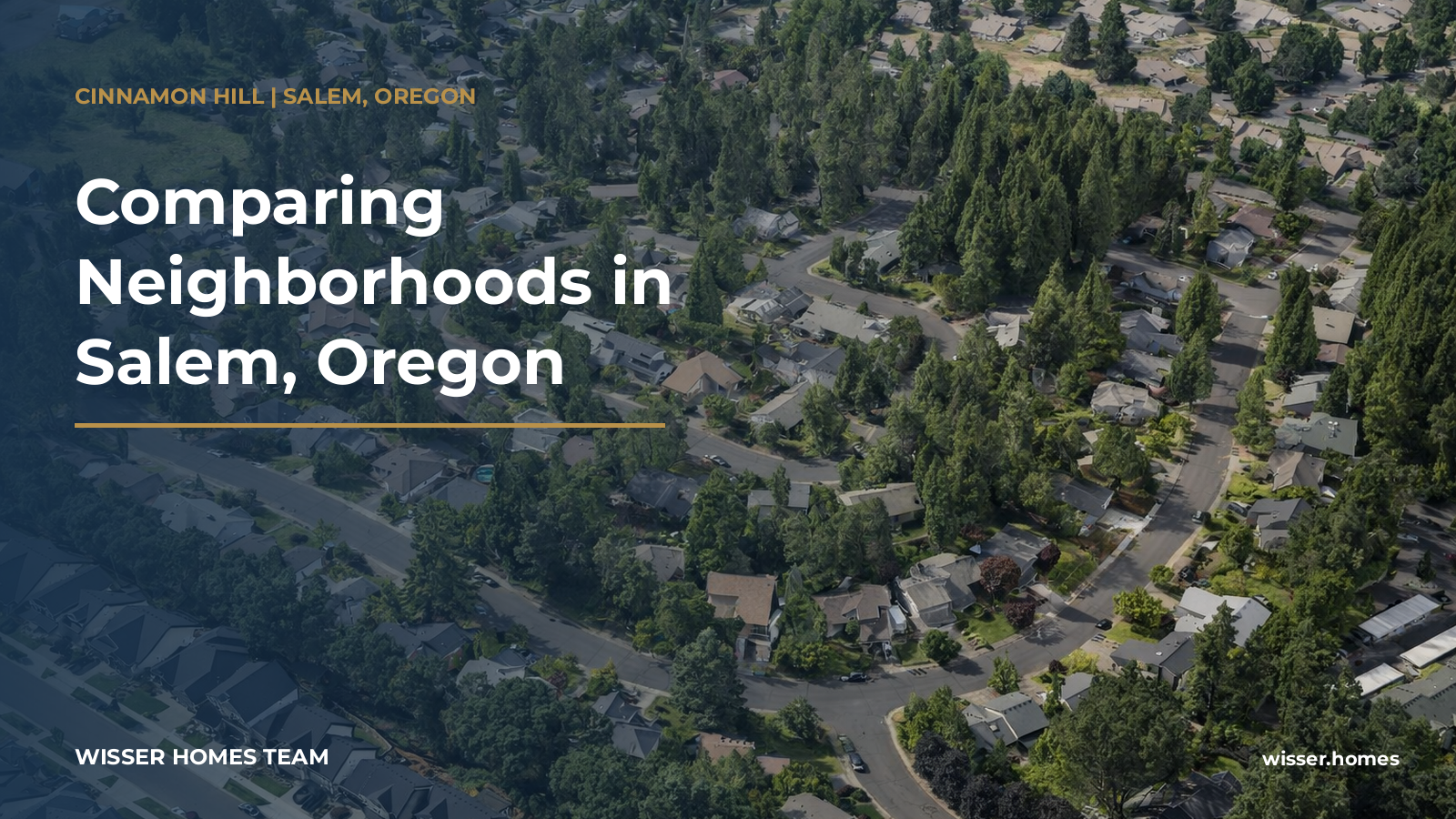
Comparing Neighborhoods in Salem, Oregon
The best Salem neighborhood is not a universal answer. It depends on the kind of home you want, the places you travel most often, the amount of yard or privacy you need, and the tradeoffs you are comfortable making.
That is why a useful neighborhood search should start with your daily life, not a ranked list. A buyer who wants an older home near downtown may focus on a very different part of Salem than someone looking for newer construction, a larger garage or easier access to south-side shopping. Even within the same broad area, two streets can offer very different lots, traffic patterns and housing styles.
Salem officially recognizes 17 neighborhood associations. Those boundaries are useful for civic participation, but buyers and real estate listings often use broader informal labels such as South Salem, West Salem or North Salem. Always confirm the exact address, city boundary, school assignment and property details rather than relying on the neighborhood name alone.
A practical way to compare Salem neighborhoods
| Area | Housing you may encounter | Location and amenities | Questions to test |
|---|---|---|---|
| South Gateway and far South Salem | Established subdivisions, newer neighborhoods, single-level homes and properties on varied lot sizes | South Commercial Street and Kuebler-area shopping, neighborhood parks and routes toward I-5 | How does the specific address connect to work, school and regular errands? |
| West Salem | Established neighborhoods, hillside homes, newer development and properties with territorial or valley views | West-side services, parks and routes across the Willamette River | How do bridge crossings and west-side routes fit your actual schedule? |
| Central and close-in South Salem | Older homes, mid-century properties, infill and homes near established street grids | Access to downtown, Bush’s Pasture Park and central employment or cultural destinations | Are age, maintenance and lot characteristics a good fit? |
| Southeast and Morningside | A broad mix of established homes, subdivisions and residential pockets near major corridors | Access to Mission Street, Commercial Street and southeast parks and services | Which streets match your preferences for traffic, walkability and lot setting? |
| Northeast and East Salem | Older neighborhoods, later subdivisions, infill and a wide range of price points | Access to Lancaster Drive, Market Street, Silverton Road and I-5 connections | Which side of the major corridors works best for your regular trips? |
| Sunnyslope and Southwest Salem | Established residential areas, sloped lots and a mix of home ages and styles | South and west routes, local parks and connections toward Commercial Street | How important are slope, views, yard usability and winter access? |
This table is an orientation tool, not a substitute for touring individual properties. “South Salem” alone does not tell you the age of the roof, whether the backyard is usable, how much traffic reaches the street or what the drive feels like at 5:15 p.m.
South Gateway: a large area with varied housing
South Gateway deserves more than a passing mention because it is both large and varied. The City of Salem describes the South Gateway Neighbors area as approximately 3,334 acres, beginning near Liberty Road SE and Kuebler Boulevard SE and extending south toward the city limits. The city lists multiple parks in the association area, including Battle Creek, Bryan Johnston, Sumpter, Wes Bennett, Wiltsey Road and Woodscape Linear.
For a buyer, that size matters. South Gateway is not one uniform subdivision. Depending on the address, you may find established residential streets, newer construction, single-level layouts, larger homes, planned developments or properties closer to the edge of town.
The practical appeal is often access to south-side shopping and services, plus routes toward Kuebler Boulevard and I-5. The tradeoff is that an address that looks convenient on a map may feel different during school drop-off, weekday commuting or weekend errands. Drive the route at the times you will actually use it.
If schools are part of your decision, verify the assignment for the exact property with the school district. Do not assume every home using a South Salem or South Gateway label has the same schools.
West Salem: hills, established neighborhoods and its own daily rhythm
West Salem sits west of the Willamette River and includes a wide range of housing. Buyers may encounter older established streets, hillside homes, newer neighborhoods and properties with territorial views. There are also west-side shops, services and parks that can keep many everyday trips on the same side of the river.
The river is also an important planning factor. A buyer who regularly travels downtown, to the Capitol area or to east Salem should test bridge routes during the hours that matter. Someone whose work, school and activities are concentrated in West Salem may experience the location very differently.
West Salem is strong enough as a search topic to warrant a closer comparison. Read our full West Salem vs. South Salem guide for a side-by-side decision framework.
Central and close-in South Salem: character and access
Central and close-in South Salem can appeal to buyers who value older housing, established streets and proximity to downtown destinations. Depending on the block, homes may include early- and mid-20th-century architecture, original hardwood floors, mature landscaping or updated infill.
The appeal of an older home should be evaluated alongside its condition. Electrical systems, sewer lines, foundations, windows, roofing and previous renovations can vary substantially. Two homes with similar square footage can have very different near-term ownership costs.
Access to parks and central destinations is another draw. Again, the exact address matters more than the broad label. Compare the route, sidewalks, street grade, parking and nearby land uses rather than assuming the whole area functions the same way.
Southeast, Morningside and nearby residential areas
Southeast Salem includes multiple official neighborhood association areas and a broad range of homes. Buyers may find established subdivisions, quieter residential pockets, homes near commercial corridors and properties with easier access to Mission Street or south Commercial Street.
This is a good example of why online neighborhood labels can be too broad. A listing may be described as southeast Salem, Morningside or simply Salem. Use the address to identify the official neighborhood association, then assess the specific property and route.
Northeast and East Salem
Northeast and East Salem offer varied housing ages, lot sizes and price points. Major corridors can provide direct access to employment, shopping and I-5, while residential pockets may feel removed from those busier roads.
When comparing homes here, pay close attention to the exact street, nearby land uses and the side of a major corridor you will use most often. A short distance on a map does not always mean the same travel experience.
Salem neighborhoods versus nearby cities
Keizer, Turner, Independence, Monmouth, Silverton and Stayton are separate communities, not Salem neighborhoods. They may belong in the same home search, but each comes with different city services, routes, housing patterns and local considerations.
If your priority is more space, a smaller community or a different commute pattern, our guide to suburbs and communities near Salem is the better next step.
Five questions to answer before choosing an area
- What home features are truly non-negotiable?
- Where do you travel at least three times each week?
- Do you prefer an older home with character or newer systems and layouts?
- How do slope, yard size, parking and street traffic affect your decision?
- Which tradeoff would you rather make: location, condition, size or price?
Once those answers are clear, the search becomes more useful. You can compare actual homes that meet your needs instead of trying to pick a winning neighborhood from a generic list.
Let the home and routine lead the search
Salem gives buyers many legitimate choices. The goal is not to declare one area best. It is to understand where the right type of home overlaps with the routes, amenities and everyday rhythm that fit you.
Wisser Homes Team can help you turn those priorities into a focused Salem search, compare properties honestly and identify the tradeoffs before you make an offer. Contact us to talk through what you need.
Frequently asked questions
What are the best neighborhoods in Salem, Oregon?
There is no single best neighborhood for every buyer. South Gateway, West Salem, central Salem, southeast Salem and other areas offer different combinations of housing, location, lot characteristics and access. Start with your home requirements and regular destinations, then compare specific properties.
Is South Gateway a neighborhood in Salem?
South Gateway Neighbors is one of Salem’s officially recognized neighborhood associations. It covers a large area in South Salem, so housing and location characteristics vary within its boundaries.
Is West Salem part of Salem, Oregon?
Yes. West Salem is the portion of Salem west of the Willamette River. It is in Polk County, while much of the rest of Salem is in Marion County.
How should I compare school options?
Verify the assigned schools for the exact property through the school district’s address-specific tool. Boundaries can change, and broad neighborhood names do not reliably establish an assignment.
Should commute time decide where I buy?
It should be one factor, but use your own real-world test. Drive or ride the route at the times you expect to travel. Fixed commute claims can be misleading because traffic, construction and destination vary.
Source note: Neighborhood association facts were checked against the City of Salem’s official neighborhood pages in September 2026. Housing descriptions are practical market observations and vary by property. Verify property boundaries, school assignments, zoning and travel routes for a specific address.
or another way